Charles "Pappy" Schuch - Continued
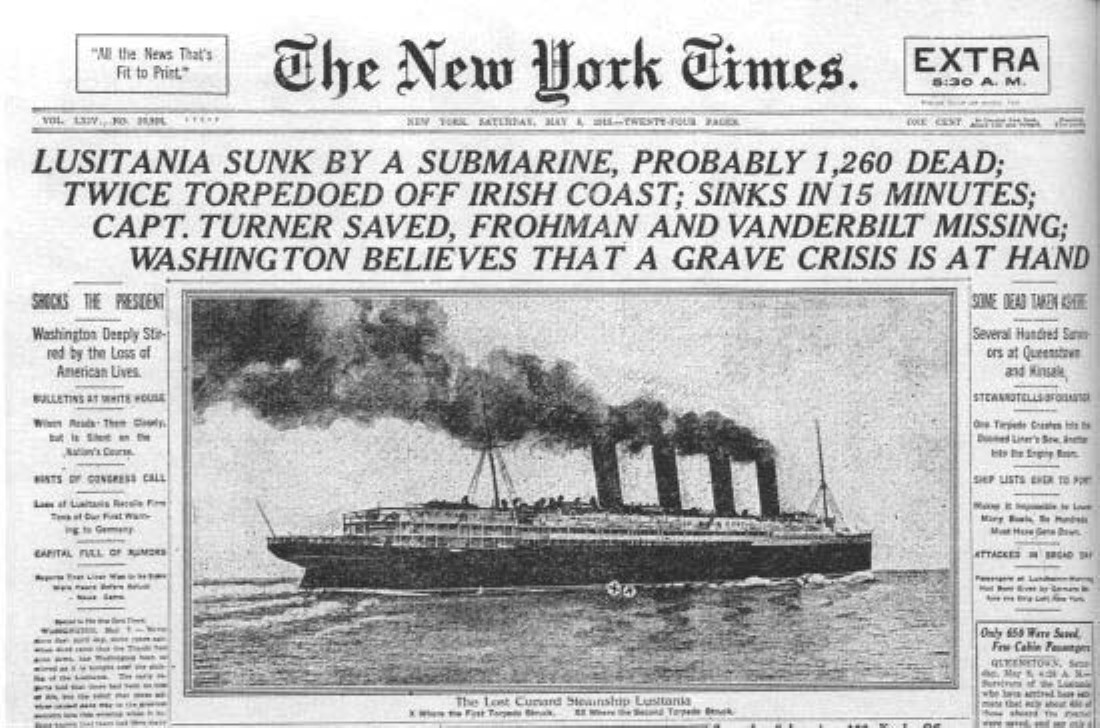
However, with the loss of 159
American lives in the sinking of the RMS Lusitania on May 1, 1915, and the
secret German attempt in January 1916, to entice Mexico into the war, on April
6, 1916, the United States also declared war on Germany.
In 1917 the administration of
Woodrow Wilson decided to rely primarily on conscription, rather than voluntary
enlistment, to raise military manpower for World War I when only 73,000
volunteers enlisted out of the initial 1 million target in the first six weeks
of the war. The Selective Service Act of 1917 was carefully drawn to remedy the
defects in the Civil War system and — by allowing exemptions for dependency,
essential occupations, and religious scruples — to place each man in his proper
niche in a national war effort. The act established a "liability for
military service of all male citizens"; authorized a selective draft of
all those between twenty-one and thirty-one years of age (later from eighteen
to forty-five).
Initially in 1917, 10 million men
were registered. This was deemed to be inadequate, so age ranges were increased
and exemptions reduced, and by the end of 1918 this increased to 24 million men
that were registered with nearly 3 million inducted into the military services.
At the start of the 20th Century
the Davids' Island had become the East Coast assembly point for units being
assigned to America’s new overseas operations. By the onset of World War
I Fort Slocum had become one of the busiest recruiting stations in the country,
processing 100,000 soldiers per year and serving as the recruit examination
station for soldiers from New York, New Jersey, Pennsylvania and the New
England states. Between 1917 and 1919, over 140,000 recruits passed
through the post. In fact, Recruit Week in December 1917 brought so many
recruits to Fort Slocum that an overflow had to be housed in New Rochelle.